
Community Archives Grant
Heritage Building Blocks
When one of the cofounders of Cariwest flew in from Trinidad, his daughter had a plan for his visit. She brought him to the City of Edmonton Archives, sat him down with a stack of photographs already tucked into sleeves, and spent an hour and a half going through them together, writing names onto sticky notes. He had helped start the organization. Now he was helping make sure the people in the pictures would never be anonymous again.
For City of Edmonton Community Archivist Jia Jia Yong, the moment says a lot about what the Community Archive Support Grant can do.
"You're giving community members the opportunity to learn what archival work is, and without this grant, that wouldn't be possible."
Records, not stories
Jia Jia's work is to raise awareness about archives and about the importance of communities preserving their own documentary heritage, especially groups that have been underrepresented in archival collections. There are many reasons those groups are missing. One of the biggest is simple: collecting, sorting and identifying records takes time and resources that volunteer-run organizations rarely have to spare.
The Community Archive Support Grant, offered by the Edmonton Heritage Council, is designed to close that gap. It supports organizations and individuals who hold a body of records and want to donate it to the City of Edmonton Archives. It does not fund a history project or an exhibit. It funds the preparation of the records themselves.
To explain why that matters, Jia Jia uses a metaphor that has become her favourite way of describing the work.
"Your archival records are like building blocks. The letter that your grandmother wrote to your grandfather, that's one block. The board meeting minutes from 1975, that's one block."
Histories, biographies and organizational anniversary books are the finished structures. Archives keep the blocks, so that a researcher in the future can build something new. It is also why she avoids saying that archives "preserve your stories." People hear that and wonder whether they need to write theirs down. What the archives actually hold are the records the stories are made from.
A grant that begins with a relationship
Now in its second year, every application so far has started with Jia Jia already knowing the group and talking with them about donating. That means the grant goes to groups with records and people ready to work on them.
She points to two outcomes beyond the practical. The first is the weight of the gesture.
"I can go and tell people that their records are important, and they can understand that. But it's very different when the EHC is able to say it's important, and we have funding, because we think it's important."
The second was a surprise. Several recipients hired or partnered with community members to gather materials and build file lists, and those people learned how archival work is done. They are becoming ambassadors for the archives in their own communities. At Cariwest, that person is Cherelle George, whose father was one of the organization’s cofounders. She has been coming into the archives to label folders, brought her father in to help identify photographs, and sets up her camera to share the work with her followers on Instagram. People have started commenting that they have materials of their own, and she has asked Jia Jia how to support those who want to donate.
Five collections so far
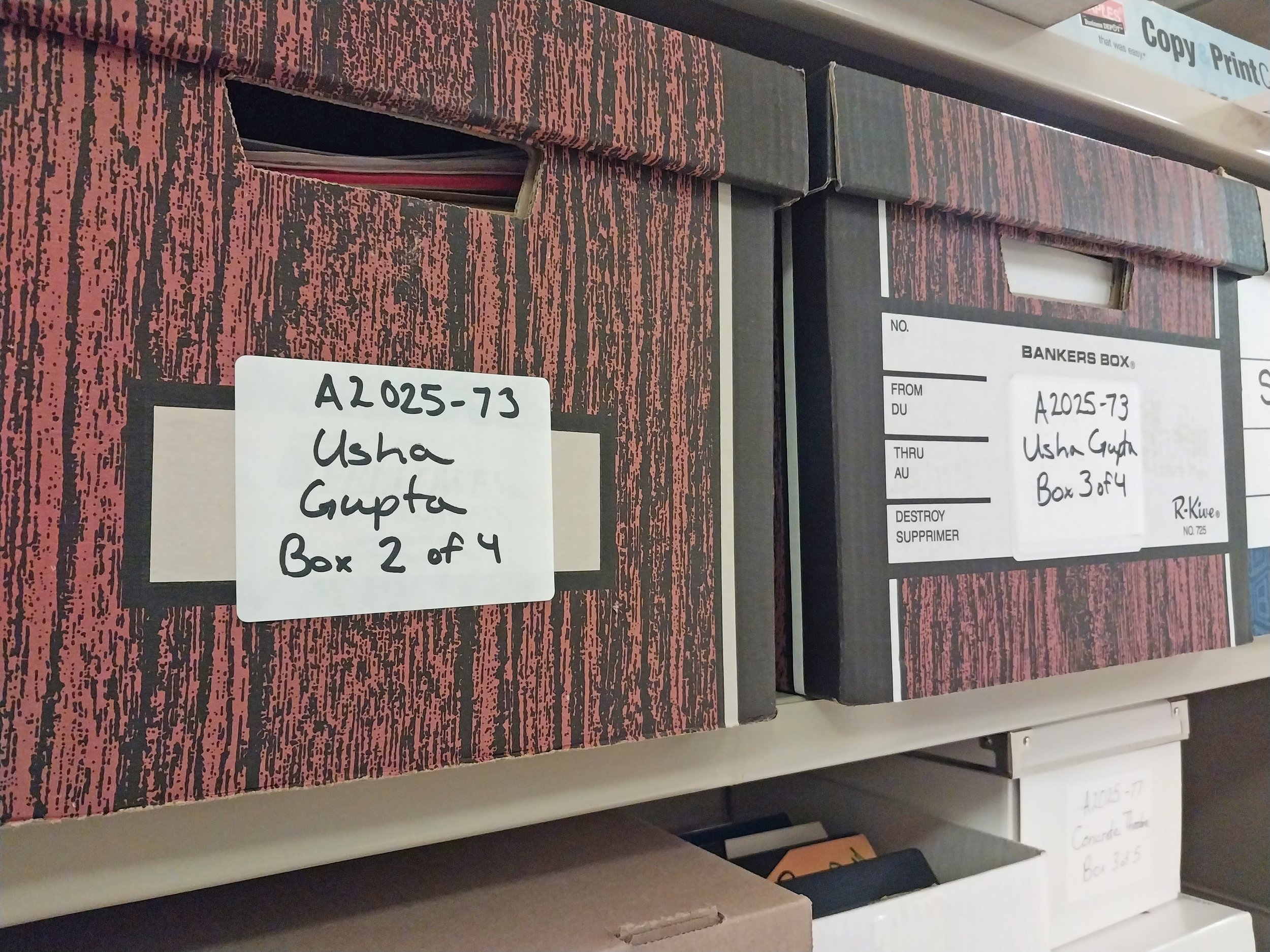
The first year supported the Al Rashid Foundation and classical Indian dancer Usha Gupta. This year it is supporting the Alberta Thai Association, Cariwest and the Edmonton Vietnamese Association. Four are organizational records, such as minutes, event photographs, scrapbooks and recordings. Usha Gupta's are personal and artistic: posters, photographs, recordings and notes on her performances.
Memory at work
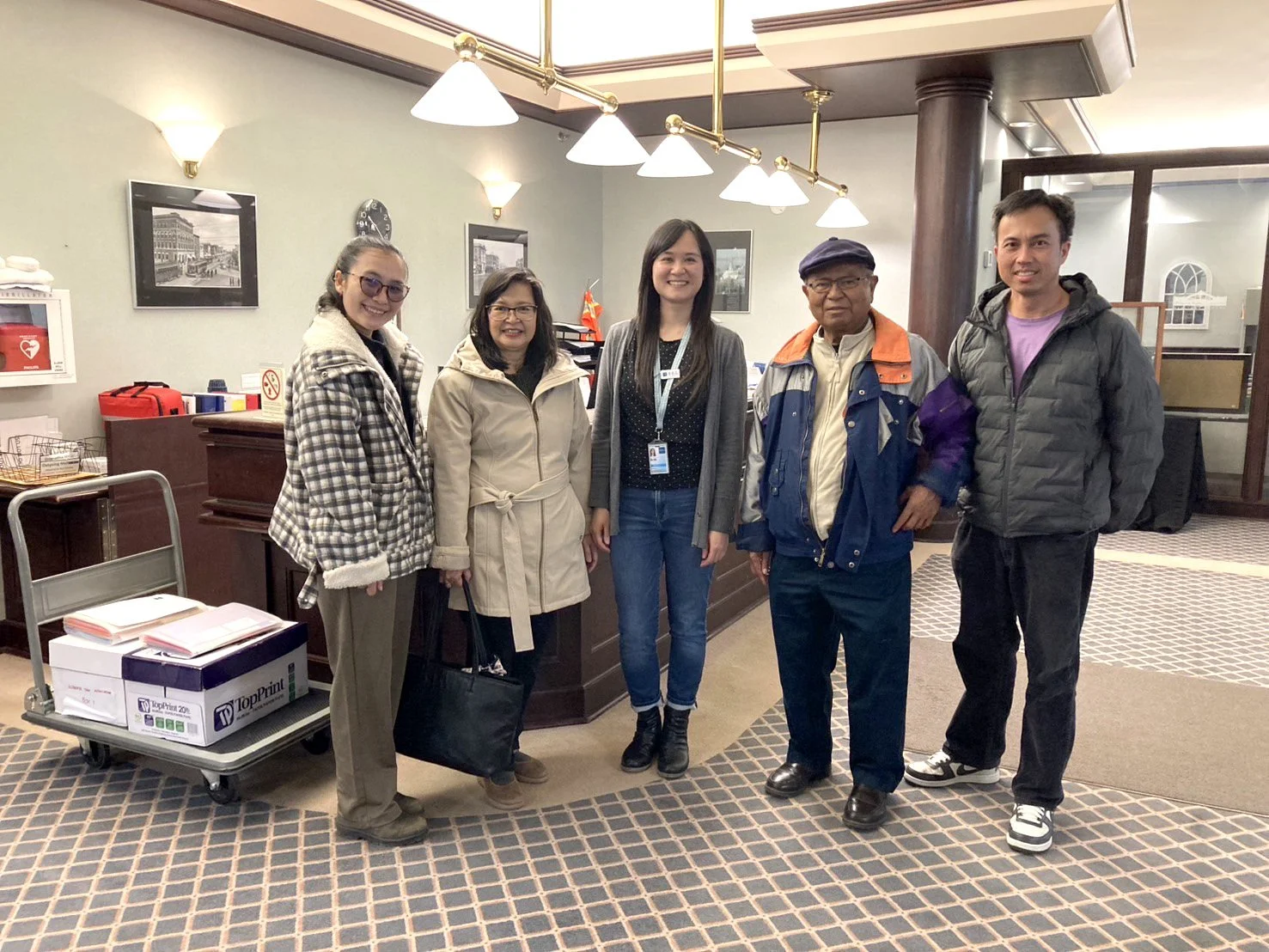
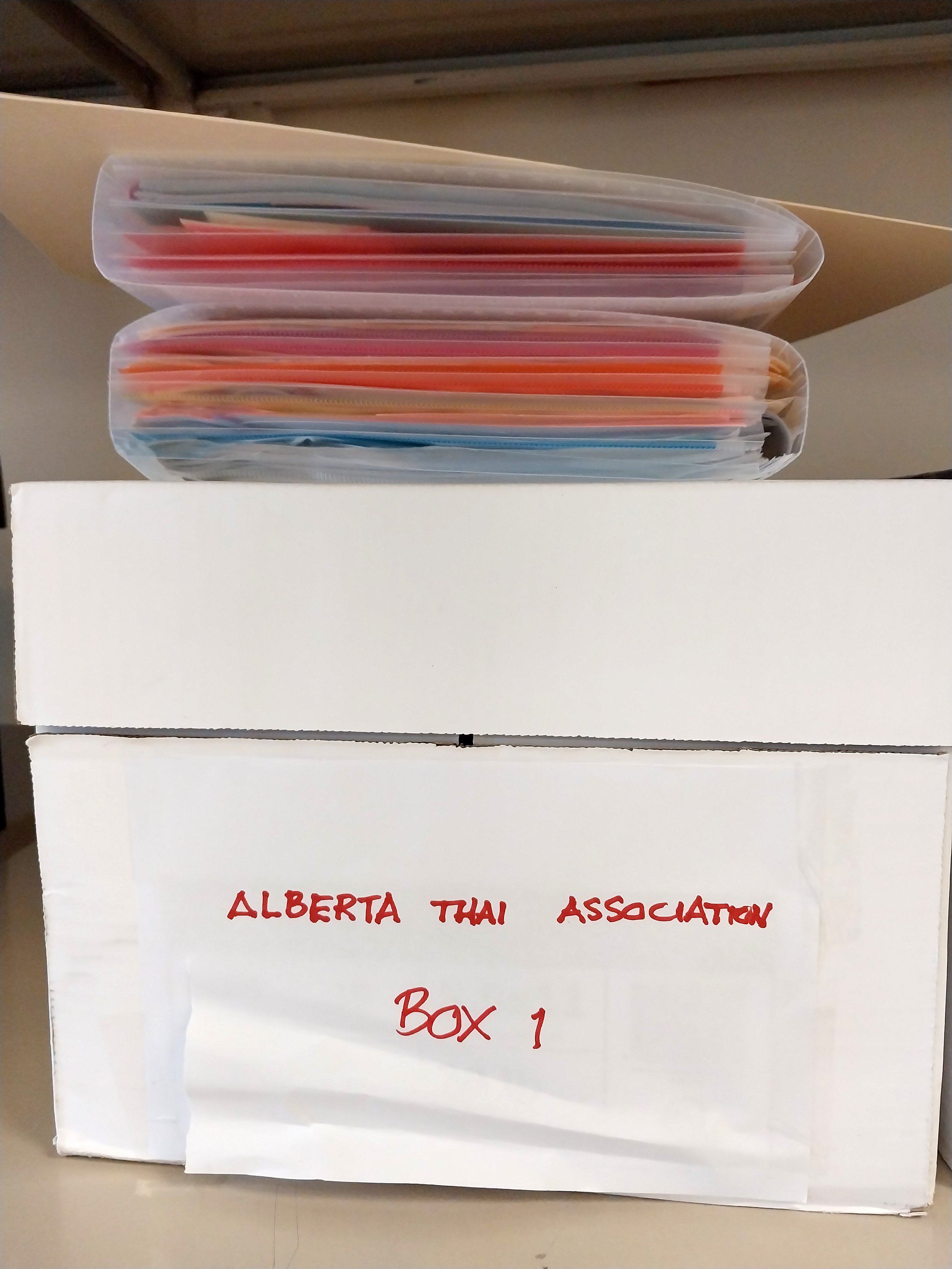
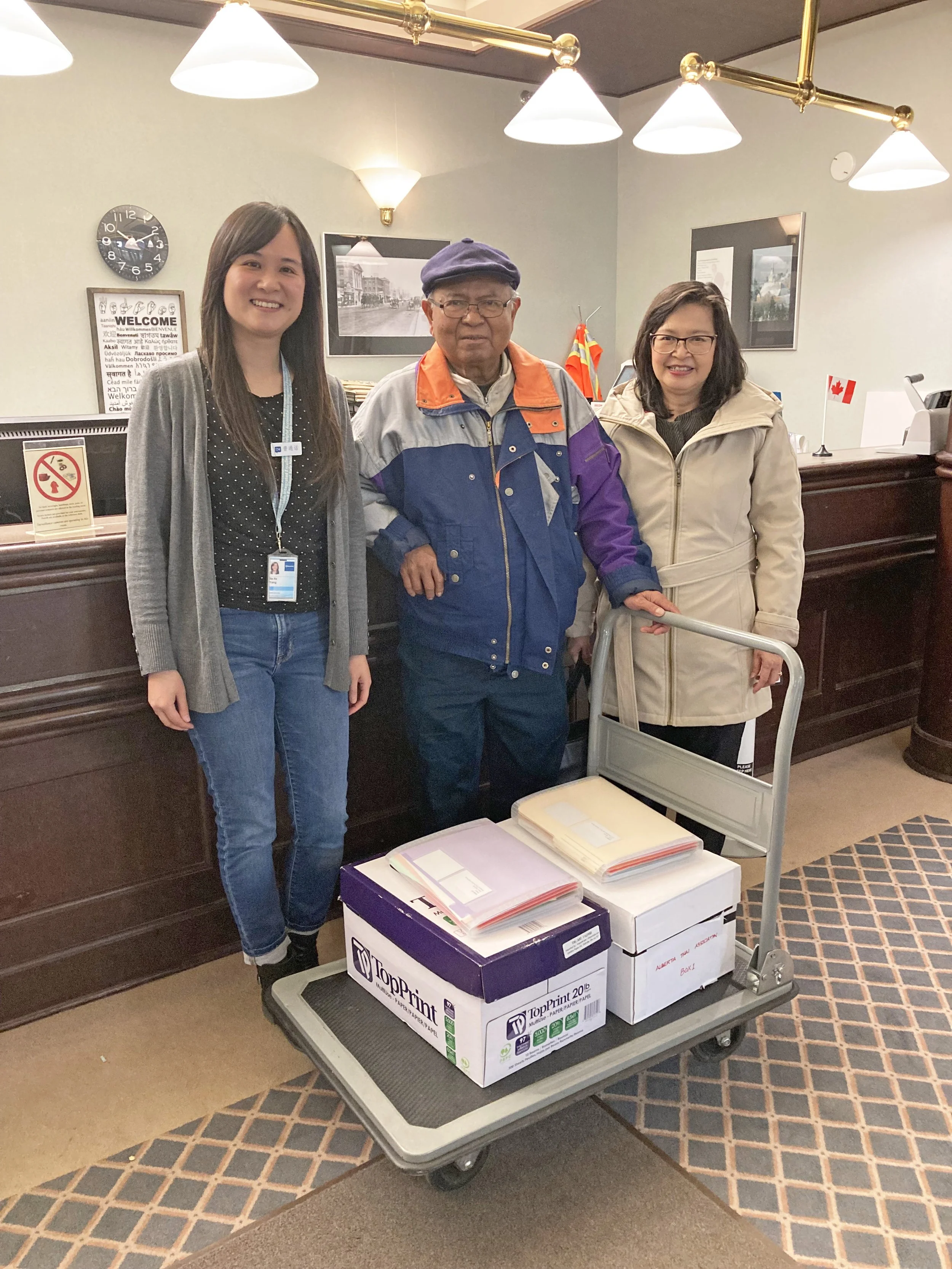
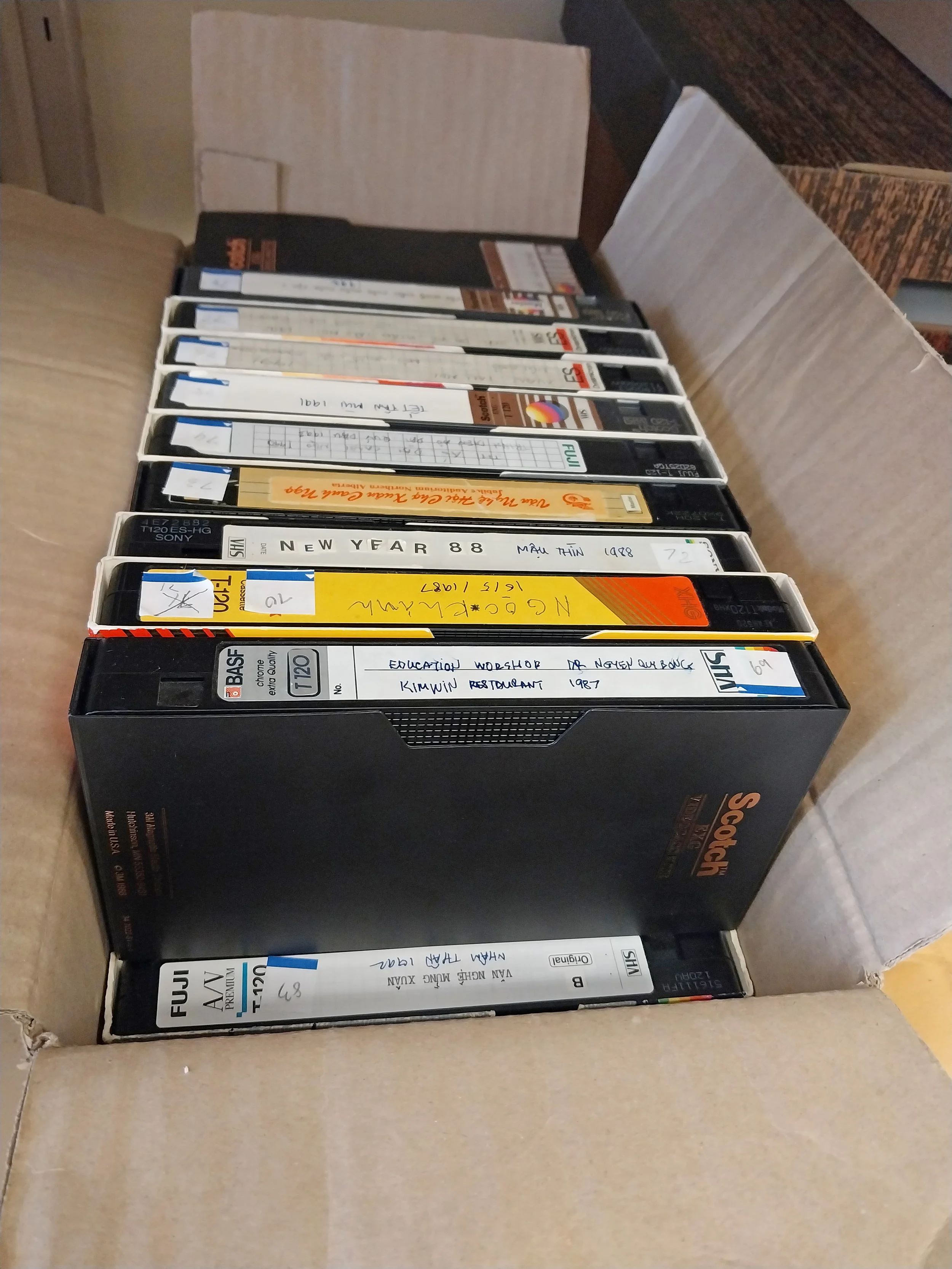
The stories behind them show the grant's impact. Jia Jia met weekly with Usha to go through boxes kept under beds and in cabinets, and Usha remembered shows from the 1990s in remarkable detail. The Vietnamese association's project focused on photo identification and an inventory of VHS tapes with Vietnamese titles. The Thai Association members photographed themselves next to their boxes when they brought them in.
Advice for Future Applicants
Not every donation needs a grant. Some are as simple as putting records in a box and handing them over. But when preparing a collection takes real time, the grant can pay for the work: an honorarium for a volunteer or a fee for someone hired to sort and inventory the records, gatherings to identify the people in photographs, boxes or hard drives for transferring material, or a partnership with another group that can help gather it. Recipients have also used it to build file lists, which give archivists context that helps processing. Even a small amount can recognize the time involved.
"I hope that the grant doesn't become this monolith where people look at it and say, 'Oh no, it requires a grant to do this work, we can't do it.'"
Come with a project in mind, such as organizing, inventorying, digitizing or identifying photographs. Looking ahead, Jia Jia would love to see the grant support more of this context-gathering work, which she calls "really a luxury," along with honoraria for the people doing it.
The Community Archive Support Grant is a partnership between the
Edmonton Heritage Council and the City of Edmonton Archives