
La Société historique francophone de l'Alberta
Fourteen years of Francophone storytelling in Alberta.
La Société historique francophone de l'Alberta (SHFA) was created in 2012 to coordinate the collection, preservation and sharing of Francophone heritage and history in Alberta. It has grown from a one-person operation into a provincial leader with about five major funders and a nationally recognized podcast. Edmonton Heritage Council was one of its earliest supporters.
La Place, a local history podcast. Around 2017 the SHFA came up with the idea of a podcast on local history, and EHC provided the seed funding to develop the concept and produce season one, set in Edmonton. That first step opened the door to other funders, and the podcast went on to run five seasons. In 2021 it won Best Francophone Podcast at the Canadian Podcast Awards, and it is approaching 40,000 downloads.
The title carries a double meaning. In French, being "from la place" means being from here, and the series asks what follows: if you are not from here, how do you find out about a place and begin to feel you belong to it? Each episode is geographic. The team opens in a local café, tours a neighbourhood, and ends the day in a local brewery or distillery for a debrief. Season one covered Edmonton neighbourhoods, starting with McCauley, and season three widened to Edmonton and surroundings. Some places, such as St. Albert, held so much Francophone history that they needed several episodes.
Marie-Anne Gaboury exhibit. EHC funded the first version of an exhibit at the Flying Canoë Volant festival on Gaboury, described as the first French Canadian woman to come to Alberta (1807). It has since received $60,000 from the federal government to expand.
Infrastructure. EHC funding helped launch the SHFA's web portal and its first major strategic plan.
Operating funding. EHC's operating grant, based on 25 per cent of the previous year's operations, let the SHFA build a stable base before chasing projects. Other funders followed.
"The 25% of previous year's operations model has been just a godsend."
Heritage language can be nebulous, so Perreaux uses two simple frameworks to guide the SHFA's planning.
The first separates memory, heritage and history.
Memory is personal and intimate. It is what sits in someone's head or on paper, such as knowing who is in a photograph. The goal is to keep it from disappearing.
Heritage is the act of passing it on, so that it is registered somewhere, in the public space or in an archive. Registered does not have to mean a legal process. An oral history counts.
History is the knowledge produced from that record, and the public history that supports research and sharing.
"Heritage is the action of handing it off to someone."
The second framework asks what a project does for the public. It can stimulate curiosity, as when a passer-by stops at a panel and discovers a story they did not know. It can educate, so that people gain real knowledge. Or it can mobilize others to take their own history seriously, research it and promote it, which multiplies the effect. When a partner proposes something, Perreaux asks where it sits on both.
Perreaux says the SHFA uses history as a community development tool: the point is not only to know dates, places and names, but to create reference points that help people feel part of a community. By his figures, about 25 per cent of Alberta's Francophones were born in the province and 75 per cent were born elsewhere in Canada or abroad. So rather than telling the story one ethnic group at a time, the SHFA focuses on themes such as arrival and plurality, and on who carried the French language in each era. In the 19th century, for example, it was the Métis who lobbied for what we would now call French language services.
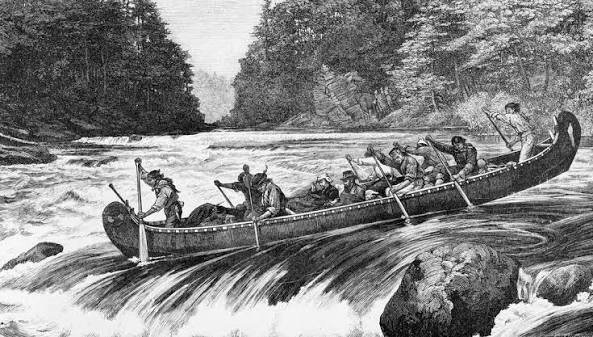
The Francophone presence in Alberta has many chapters, he notes: a First Nations hunting chief nicknamed "the French leader" in 1754, a Bantu Congolese voyageur on a 1823 mapping party, the first Black graduate of Campus Saint-Jean in 1968. He says the hardest challenge is the idea that a plural society must turn the page on its past, and he answers it by asking which of these chapters people would delete.
The approach works. Last year he gave a 25 minute history presentation to about 150 newly arrived Francophone immigrants, and it brought the SHFA new members and new presenters. At the time of our interview he was preparing to give it again
The SHFA hosts the Foire du patrimoine franco-albertain on November 21, 2026, at the Cité francophone in Edmonton, on the future of Saint-Jean from a historical perspective (details). Perreaux also hopes to return the original Francophone cultural centre, built in 1930 on 109 Street, to the community as a small interpretive centre, a project that would need significant fundraising.