
Journey of the Horse
Preserving Chinese Canadian Heritage in Edmonton
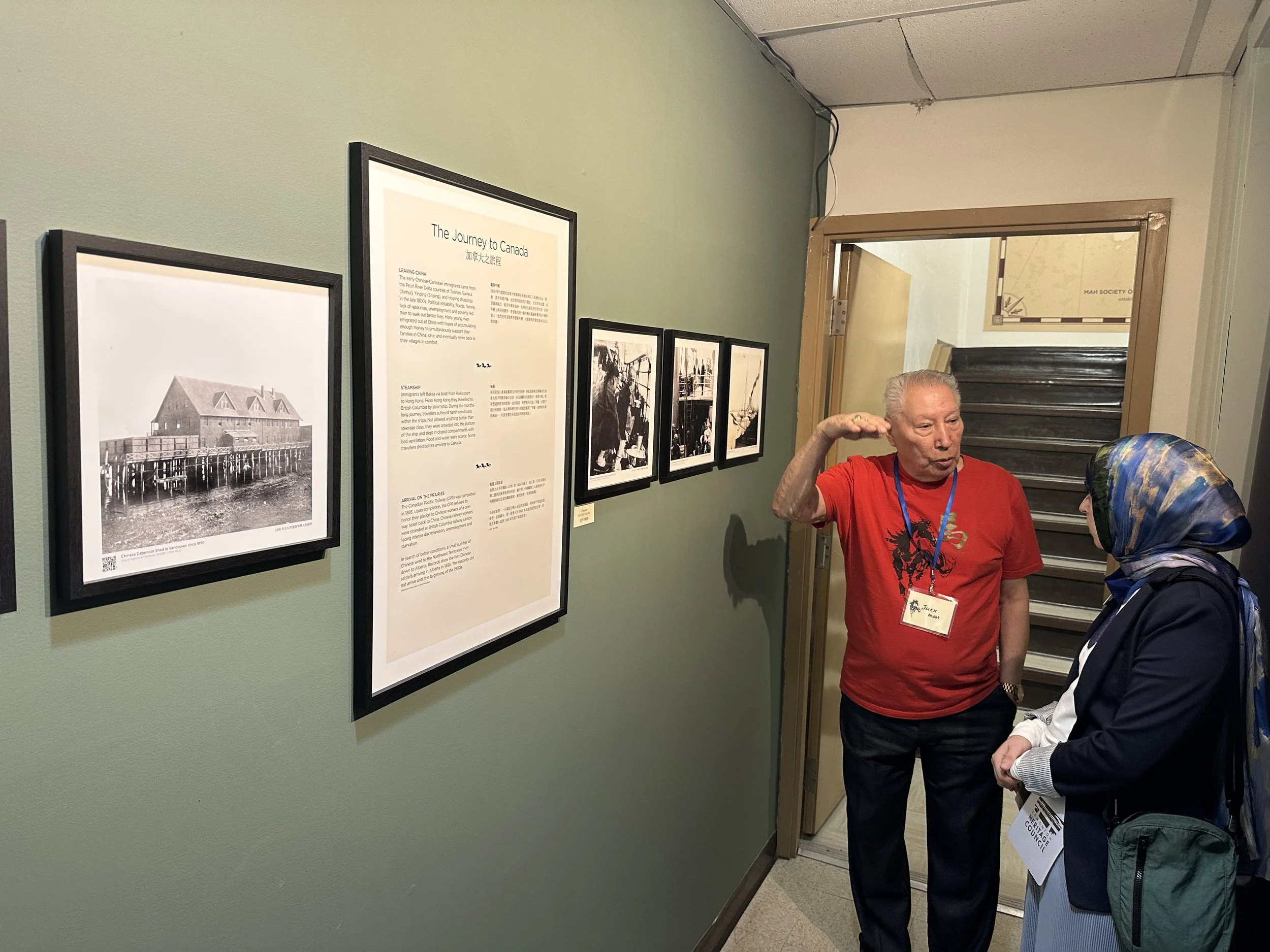
In the heart of Edmonton’s Chinatown, a remarkable exhibit has been bringing to life the stories of Chinese immigrants who helped shape our city. “Journey of the Horse” is the result of two passionate individuals’ determination to preserve and share the heritage of Edmonton’s Chinese community before these invaluable stories disappear.
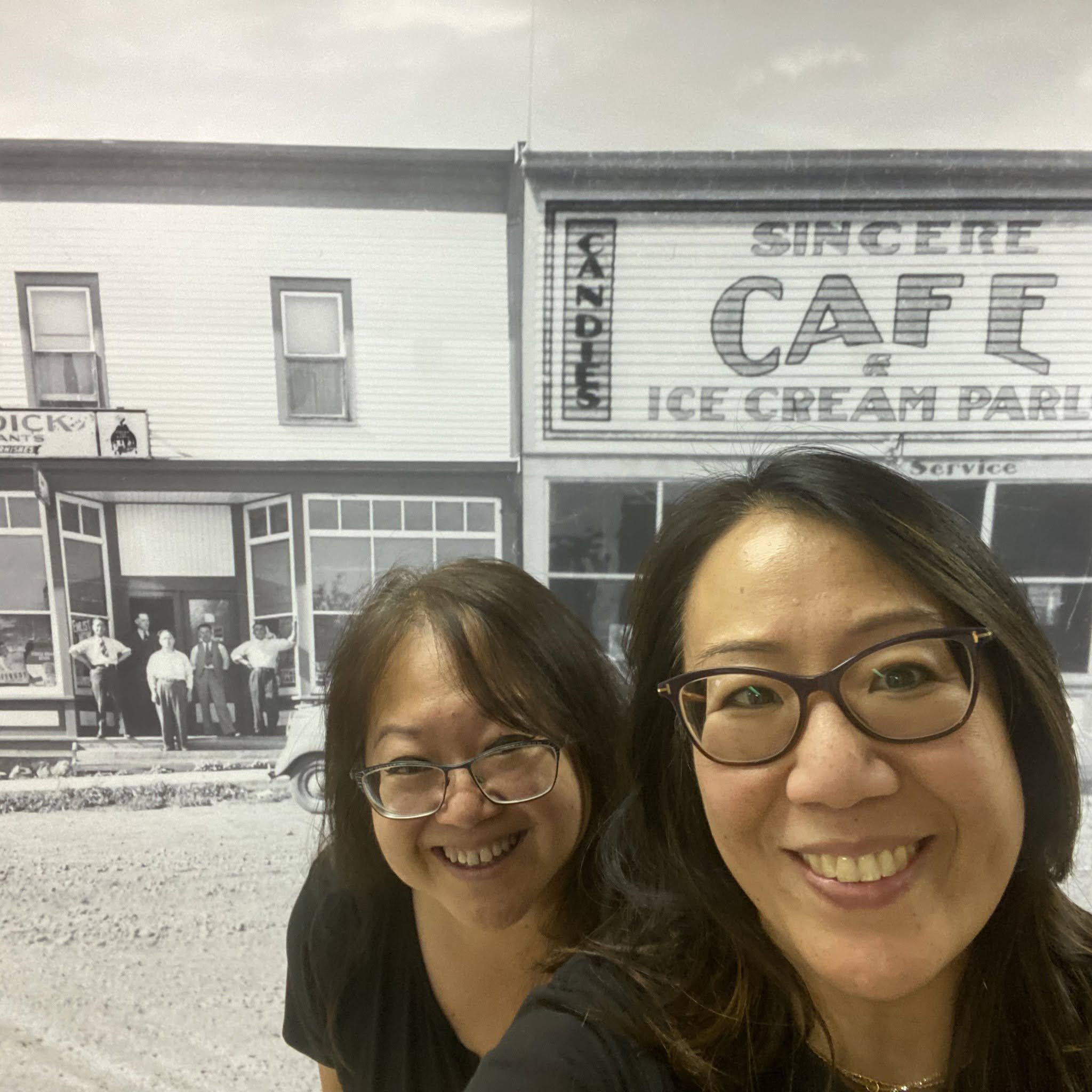
Sue Mah and Andrea Maru are the driving forces behind Journey of the Horse. Their collaboration began during a heritage tour to China in 2019, where they discovered their shared passion for Chinese Canadian history.
For Sue, the seed was planted during an earlier trip to Guangdong Province in 2018. “We went back to visit, and I was fortunate enough to go where my father was born and in the house that he was raised in. This house was where my grandfather and his brother, when they came to Canada in the early 1900s, sent money back to build,” Sue explains. Standing at the port where men departed for places around the world, Sue was struck by her grandfather’s courage: “My grandfather left here at age 14, or at that time, probably 12... by himself and traveled across to a brave new world. And it really hit me.”
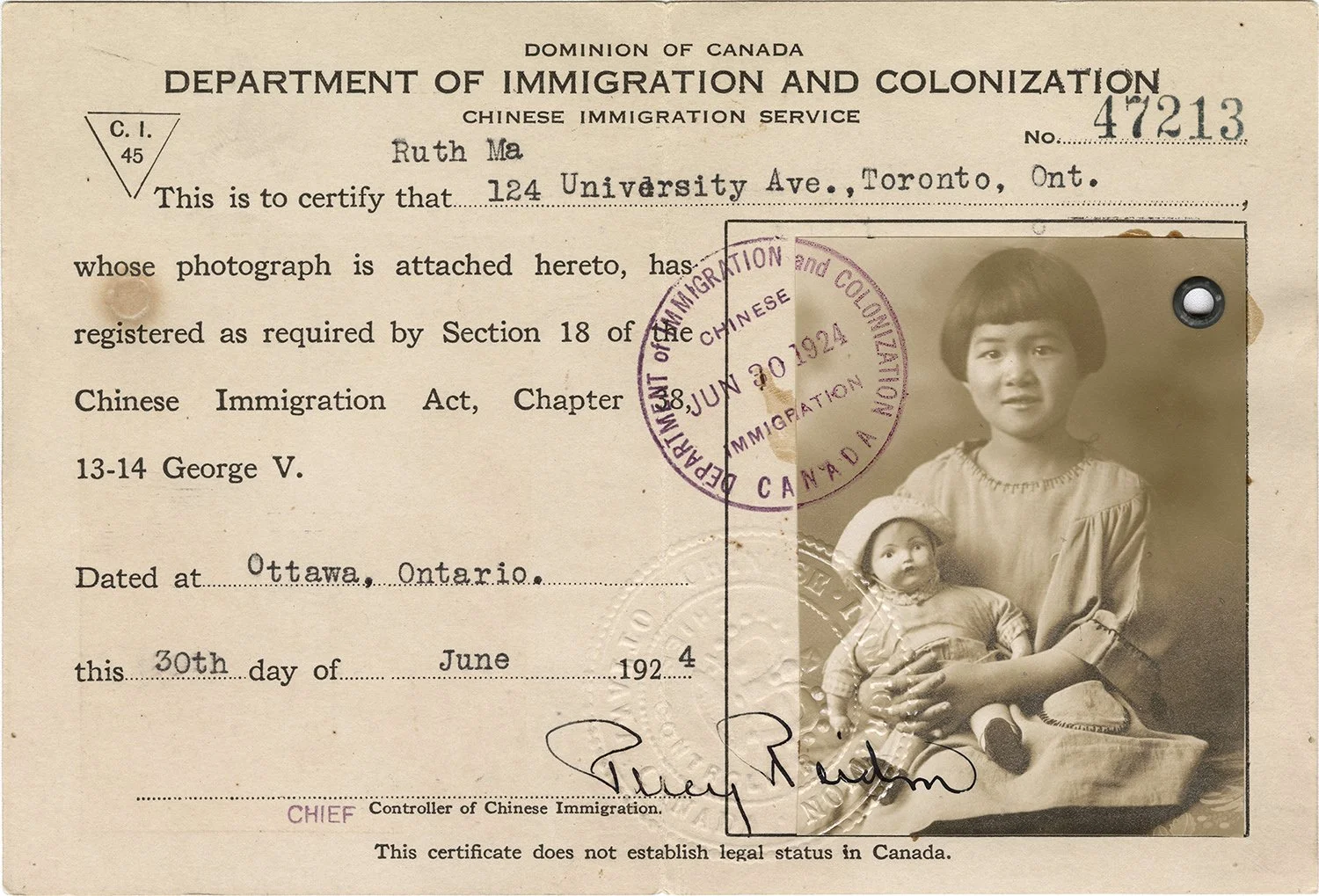
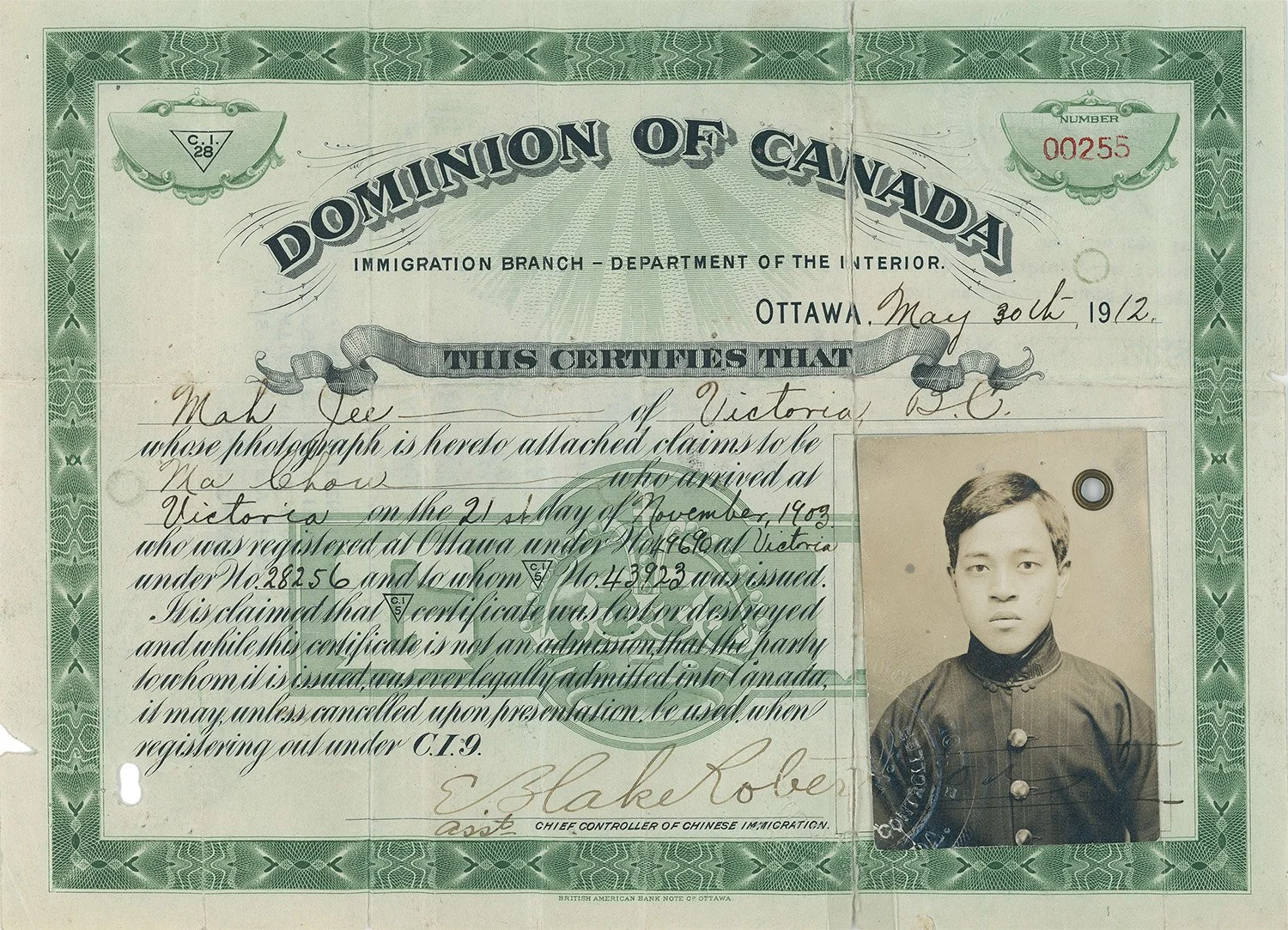
Andrea approached the project from a different angle. In 2020, she participated in the “Paper Trail” project, documenting Chinese immigration certificates. “I never was told anything about the Exclusion Act or about the discrimination that they went through,” Andrea shares. “I used to wonder, why does my dad have this ‘Congratulations, you’re now a Canadian citizen’ paper when he was born in Alberta? Why doesn’t he have a birth certificate?”
This process opened Andrea’s eyes to a history she had never fully understood. “A huge can of worms was opened on my side, same time Sue had this inspiration, and then I was kind of very emotionally geared up to do something.”
What began as a modest plan to refresh the Mah Society building evolved into something much more significant. Initially, the society had allocated just $2,000 to repaint the walls of their aging drop-in center.
“We wanted to sort of shake up the building a little bit and make it more modern,” Sue explains. “The whole plan was trying to get a younger generation to come back into Chinatown, to come back in to use the Mah Society building.”
With grant funding from Alberta Culture and the Edmonton Heritage Council, the project expanded dramatically. The pair transformed the building’s basement, once described by Sue as “pitch black and very scary”, into an immersive historical exhibit.
“Everything I had was in my head,” Sue says, “and Andrea, because we went to the heritage tour together, we have the similar passions, she actually was able to see what was in my head and help me create this with her design background.”
Andrea adds, “Sue’s got the gift of getting these elders to open up. A lot of them never told these stories before.” Meanwhile, Andrea brought her professional design skills to transform these stories into compelling exhibits. “We come with totally different skill sets from almost different angles… but we work great together.”
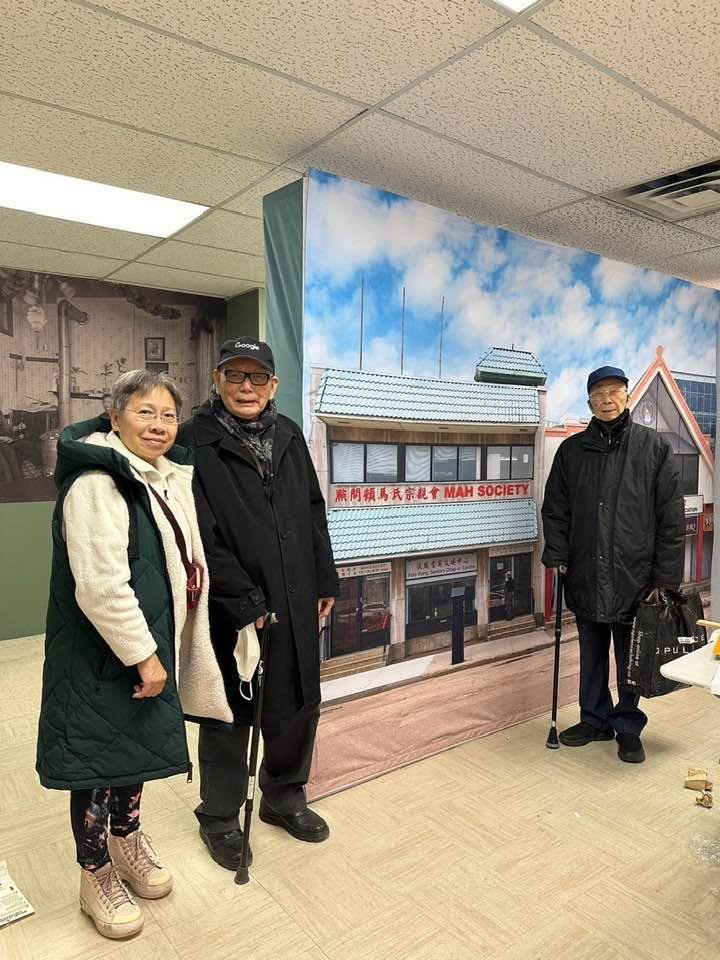
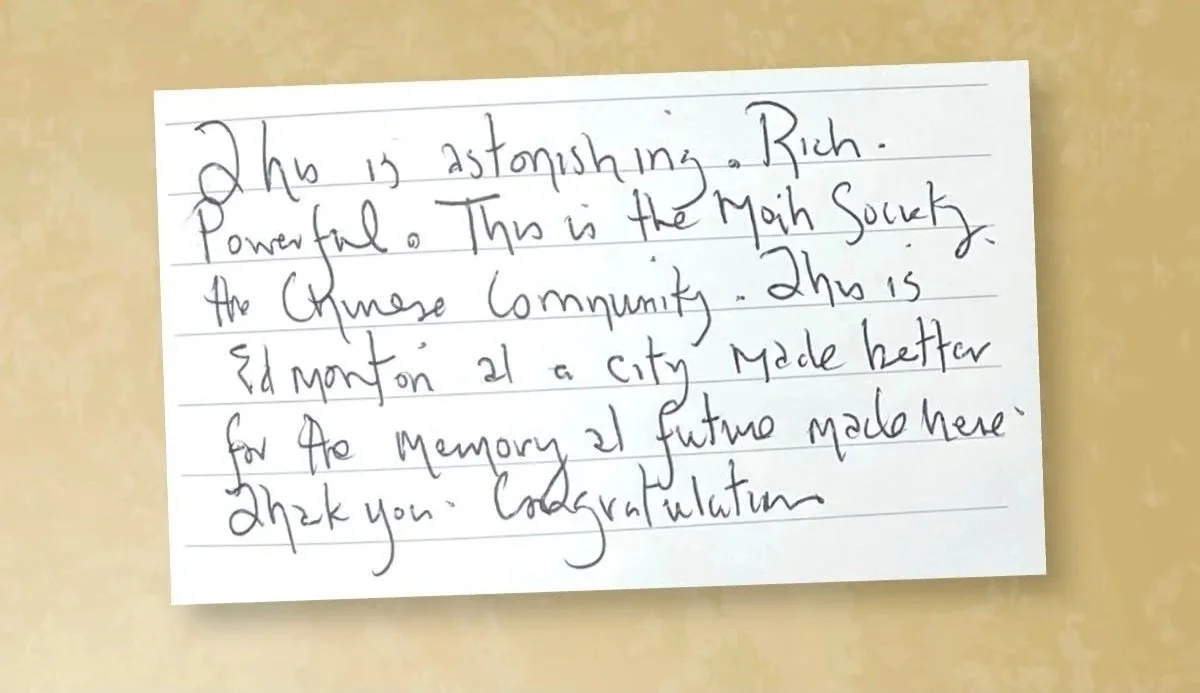
Since opening on February 10, 2023, Journey of the Horse has welcomed approximately thousands of visitors and gained recognition far beyond Edmonton.
“We have had families deliberately come up from San Francisco, from Washington state, to see our exhibit,” Sue shares proudly.
The project has facilitated powerful connections to history. Working with the Paper Trail project and a digital researcher named Connor Ma, they helped visitors discover their family histories. “We had people come in, totally strangers to us, who have never seen their grandparents’ pictures or their stories. And these are people in their 70s, and Connor was able to find these things out... it was so emotional.”
The exhibit has attracted interest from civic leaders, with visits from Edmonton’s mayor and city councilors, and has collaborated with numerous organizations including the Royal Alberta Museum, the Art Gallery of Alberta, and various Chinatown community groups.
Journey of the Horse has gained attention even in Vancouver, where Andrea discovered people already knew about their work: “I don’t know how it came out in the conversation, but they’re like, ‘Oh, your Journey of the Horse.’ And I’m like, ‘oh yeah.’ And so they had been following from Vancouver. We had no idea.”

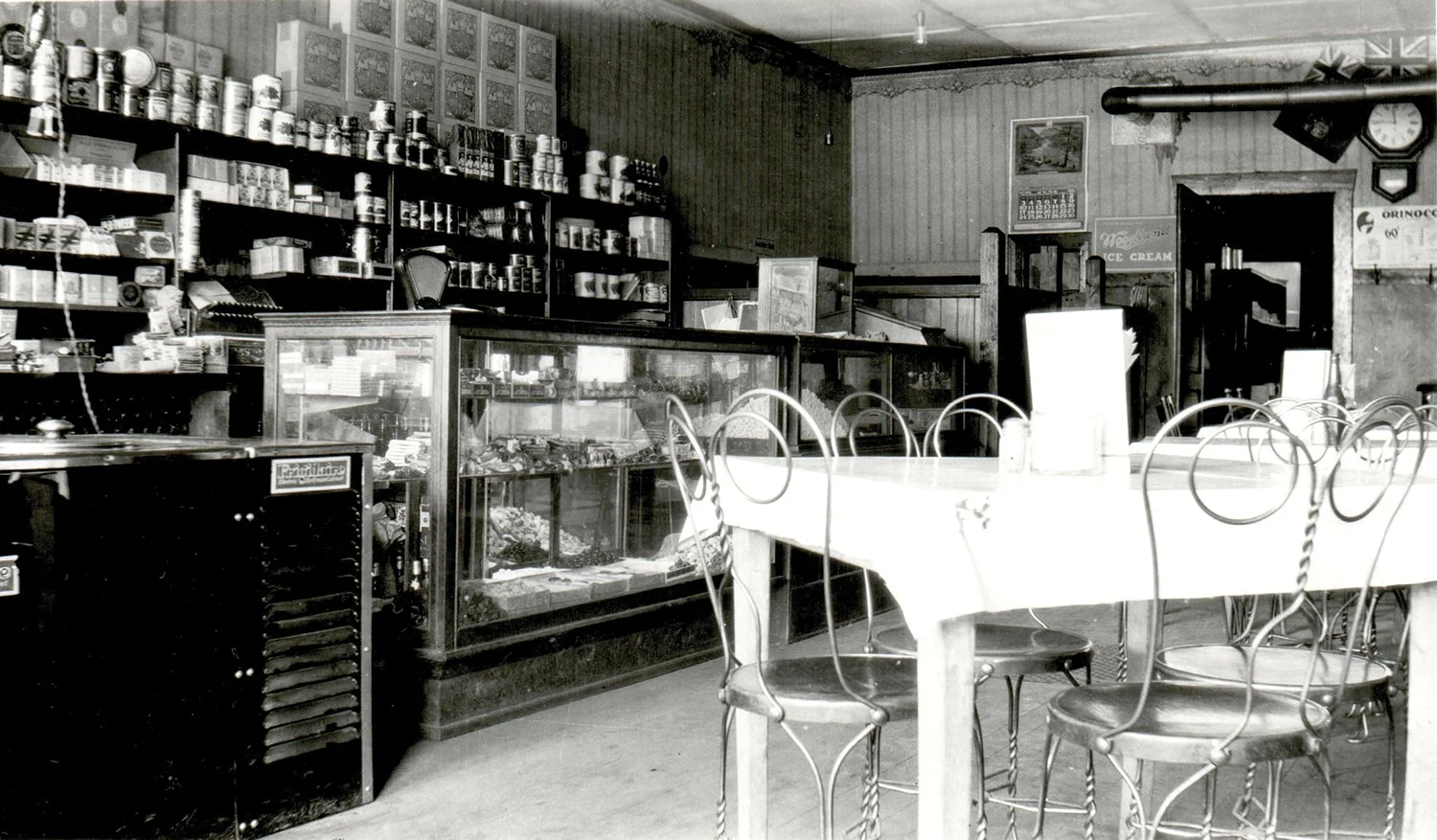
Journey of the Horse captures elements unique to Edmonton’s Chinese Canadian experience, including the stories of immigrants who arrived after the Exclusion Act was repealed.
“They had to all go to McCauley School in Chinatown to learn English. And these guys are 14-16, 18-20, and they were put in classes with grade three-ers, nine-year-olds,” Sue explains. “A lot of them didn’t go on to pursue university... They went and just followed their dad’s footsteps, of continuing on with their stores and stuff, and gave us the chance to go.”
The exhibit also highlights Edmonton’s neighborhood grocery stores, once found “in almost every corner in the 50s, 60s, and 70s, and even up to 80s before they all closed down.”
Andrea notes how Edmonton’s Chinatown differs from others she’s known: “I had never really spent any time in Edmonton’s Chinatown. And the first time Sue drove me there, I’m like, ‘Where’s Chinatown?’ Looking around for sort of the iconic architecture that I know from Victoria, where my mom’s family is from, and Vancouver—and it doesn’t exist here.”
Sue adds that Edmonton’s Chinatown has physically moved several times throughout history: “Originally it was 97 [Street] but then it got moved to 96/95, and then they moved back to 97, and then with the Harbin gate and the development of the federal building, they also moved that as well.”
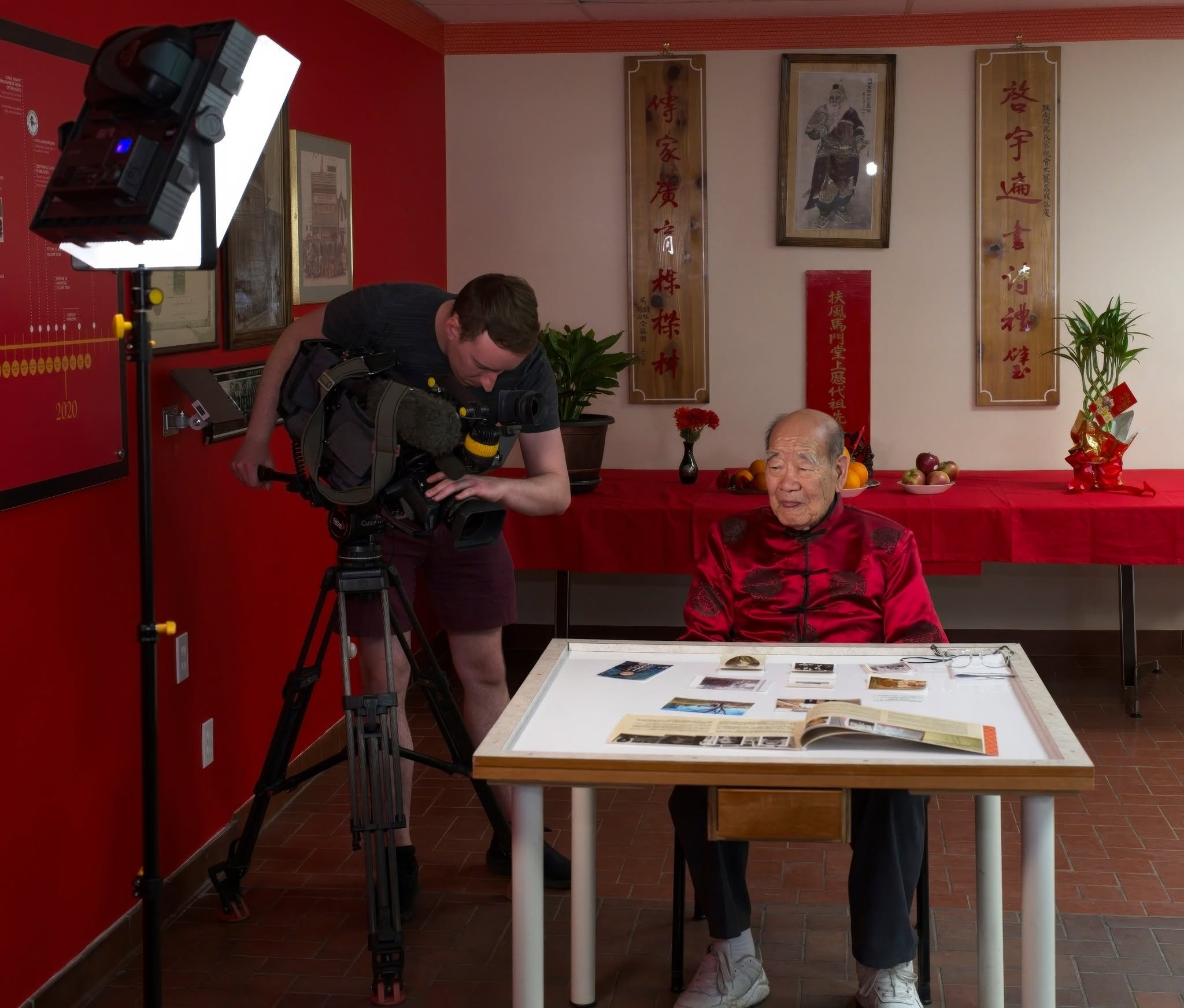
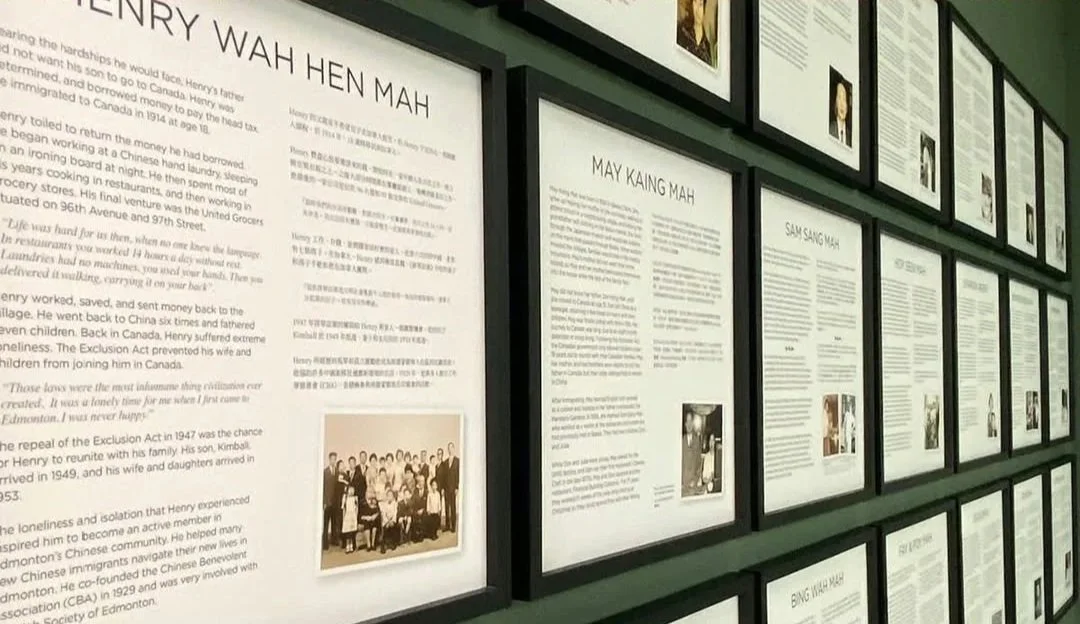
Perhaps the most powerful aspect of Journey of the Horse is its role in preserving stories that might otherwise disappear. Many of the immigrants whose experiences are showcased never shared these stories with their own children.
“We’ve had children of the people whose stories we’ve reported saying ‘I never knew that. They never told me that,’ because they basically didn’t want us to be burdened with their hardships,” Andrea reveals.
As Sue and Andrea reflect on their project, they recognize they’ve created something that goes beyond a simple museum exhibit—they’ve created a space where generations can connect with their heritage and where Edmonton’s Chinese Canadian history is preserved for future generations.
“Once they’re gone, which is an eventual thing, we’re all going to be gone. Stories are gone,” Andrea notes. Journey of the Horse ensures these stories will live on.